Mining company branding is the name, the identity and the investment story a listed explorer or developer uses everywhere an investor meets it: the ticker, the investor website, the corporate presentation, the film and the people on site. For a listed miner the brand works inside the disclosure rules. It cannot claim what the qualified person has not approved, and on the TSX Venture Exchange a name change is material information.
This guide is for the chief executive, the board and the team who carry the company to market. It sets out what a mining brand covers, what the exchange decides about the name and the ticker, how the identity should hold from the deck to the jacket on site, what a brand may not claim, and when a rebrand makes sense. Mines branding is often treated as a logo. For a listed company it is closer to a promise that every page and every film will say the same thing.
What mining company branding covers
Seven pieces, each with a job. The last column is the rule that most often catches a mining brand out.
| Part | What it is | Its job | The rule to watch |
|---|---|---|---|
| Name and ticker | The legal name, the trading name and the stock symbol | Be found, remembered and not confused with another issuer | TSXV Policy 5.8: the exchange may object to a confusing name; a name change is material |
| Mark and identity system | The logo, colour, type, grid and photography style | Make every page recognisably the same company | None in itself; what is written in it is disclosure |
| The investment story | Why this project, why this team, why now | Give a generalist a reason to look, in words they can repeat | Built from disclosed facts only; forward-looking plans labelled |
| Investor website | Projects, news, filings, presentation, share structure | Due diligence in a few clicks, on a phone | NI 43-101 counts websites as written disclosure |
| Corporate presentation | The deck used in meetings and posted online | Carry the story and the numbers in the brand’s language | Qualified person named; no gross metal values (NI 43-101 ss.2.3 and 3.1) |
| Film and photography | Site film, interviews, the shoot’s photographs | Show the project to investors who will never visit it | Oral statements are disclosure too (NI 43-101 s.1.1) |
| On site and at events | Jackets, signage, booths, the people | Make the company visible where it works | A banner line is a public statement like any other |
Our summary, with the rules as we read them on 27 November 2026 in TSXV Policy 5.8 and National Instrument 43-101. ASX companies apply the JORC Code reporting rules to presentations and website content (Listing Rule 5.6).
The name and the ticker: what the exchange decides
A listed miner chooses its name, but not alone. On the TSX Venture Exchange the rules are in Policy 5.8, and they shape a rebrand from the first meeting.
- The corporate regulator approves the name first. The exchange generally accepts a name the regulator in the company’s jurisdiction has approved, but may object to one that is virtually identical to another listed issuer’s, or so close that it is likely to confuse or mislead the public. The policy encourages companies to check the names of reporting issuers on SEDAR+ (s.1.1).
- A name change is material information. The company needs the exchange’s acceptance and discloses the change under the timely disclosure policy (s.2.1). It files a Form 5H with the fee (s.2.7), and the shares normally start trading under the new name two or three trading days after acceptance (s.2.5). Where the change comes with a reverse takeover or a qualifying transaction, it should not take effect before the transaction closes (s.2.6).
- The ticker may not match the name. The exchange allocates a one to four letter symbol and the company may ask for up to three in order of preference, but the symbol may bear little or no resemblance to the name (ss.3.1 and 3.2). A company may keep its symbol through a name change or ask to change it (ss.2.3 and 4.1).
- A Canadian symbol is not reserved in the United States. Symbols are co-ordinated across Canada only, so the same letters may not be available on a US market (s.3.4). Check before the brand is built around them.
Other exchanges have their own procedures; read your exchange’s rules and ask your counsel before you announce a new name. Practical checks sit alongside the rules: the web address, the social handles, and whether the name reads the same in the languages of the countries where you work.
Mining brand identity: one system, from the deck to the jacket
A mining brand identity is a system, not a logo: the mark, one or two colours, the typefaces, a grid and a way of taking photographs, used the same way on the website, the deck, the film and the clothes the team wears on site. When the system holds, an investor who sees a slide, a film still and a web page recognises one company. When it does not, the company looks like three.
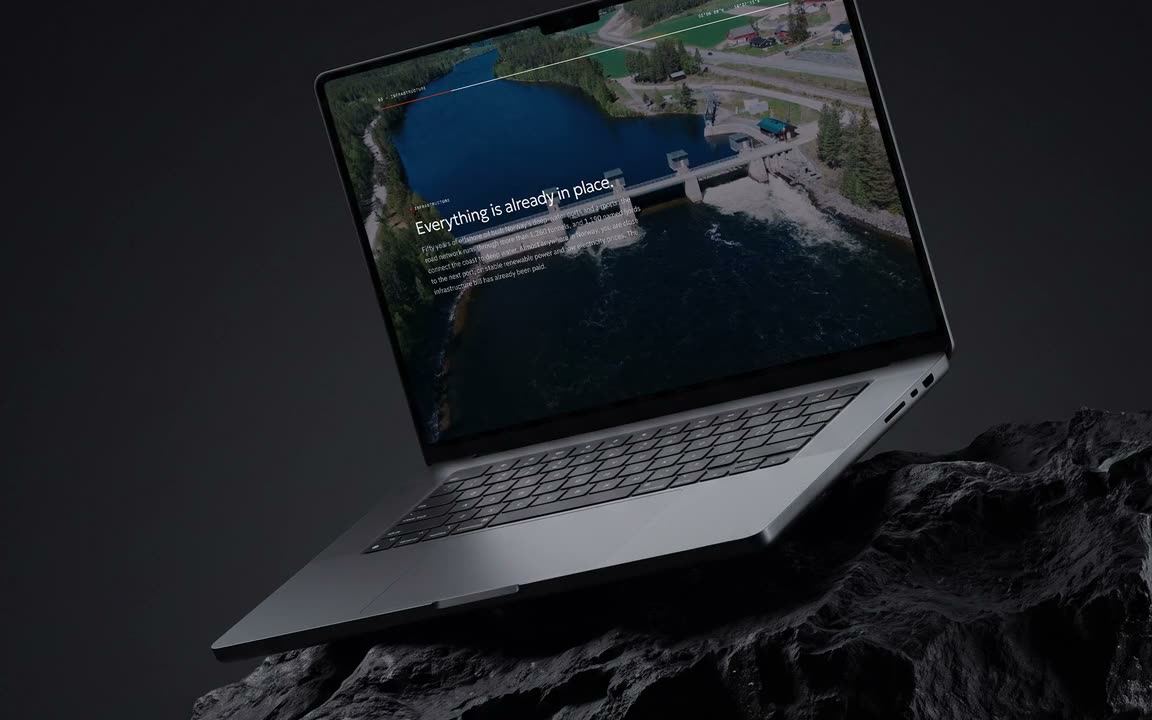
For Teako Minerals, a Norwegian critical-metals exploration company listed on the CSE, the brand was evolved, not replaced: one mark, one red, one typeface cut for critical metals. Teako came with a mark its people already stood behind, so we kept its geometry and rebuilt the system around it, on an editorial Swiss grid. The July 2026 investor deck is 26 pages on the same grid, in the same three faces and on the same ground as the website, and the team wore the brand on site for the docuseries we shot in Norway. Mark Steeltoft, a director and Teako’s vice president of corporate development, put it this way: “What began as a rebranding exercise developed into a much broader transformation of our website, digital presence, investor materials and content strategy.”
The investment story under the brand
The identity is how the company looks; the story is what it says. For a listed miner the story answers three questions before the geology: why this project, why this team, why now. It is written from disclosed facts, the resource with its categories, the work programme, the cash and the team’s record, and it stays the same from the home page to the last slide.
The test is whether a generalist can repeat it after one reading. If the first slide is a cross-section, the story has not been written yet.
What a mining brand may not claim
A tagline on the home page or a line on a booth is disclosure like any other. The rules that decide what a mining brand can say are the disclosure rules.
- No promotional adjectives the project cannot carry. In CSA staff’s review of 130 mining investor presentations, 38 per cent included statements that could be considered overly promotional or misleading. Staff named “world-class”, “spectacular and exceptional results”, “production ready” and “ore” used of mineral resources, especially by explorers that made a project look more advanced than it was (Staff Notice 43-309).
- No numbers the qualified person has not approved. NI 43-101 applies to oral statements and to written disclosure, websites included (s.1.1). Technical information must be prepared or approved by a qualified person (s.2.1), and the brand may not show the gross value of metal in a deposit or a metal equivalent grade without each metal’s grade (s.2.3).
- Balanced in every venue. CSA Staff Notice 51-356 expects issuers to keep disclosure and promotion balanced and not misleading, including avoiding exaggerated reports and promotional commentary, wherever it appears.
- On ASX, JORC applies to the website too. Listing Rule 5.6 applies the reporting rules to all public reports, its note naming presentations and website content, and announcements of results or resources name the competent person and need their prior written consent to the form and context (rule 5.22).
Keeping the website, the deck and the film consistent
- Keep one sheet of approved facts. The resource, the latest results, the share structure and the cash, each with its date and the qualified person’s approval. Every page, slide and caption draws from it.
- Update everything when the news changes. A new resource that is in the release and not on the website or in the deck leaves an investor holding two numbers.
- Date and archive. National Policy 51-201 asks companies to date material information on the website when it is posted or changed and move outdated information to an archive (s.6.11).
- Lock the script before the edit. A film says the brand’s story out loud, so its narration and captions go to the qualified person before the cut is locked.
When a mining company rebrand makes sense
A rebrand is worth its cost when the company has changed and its brand has not: a new project or commodity after an acquisition or a reverse takeover, a merger, a listing on a new exchange, or a name that is confused with another issuer. It is rarely worth it to look fresh before a financing when nothing else has changed.
The order of work matters more than its length. Write the story first, then the identity, then the deck and the website, then the film, so each is made once. If the name is changing, plan the announcement and the exchange filing with counsel before the new identity appears anywhere in public.
Where we fit
We make brands for listed mining companies together with what the brand appears on: the investor website, the deck, film from the site and the content between news releases. The approach is on our brand page and the work on our mining page; what the website needs is in our guide to the investor website, and how the brand fits a wider plan is in our guide to the mining communications agency. If your brand was made for the company you used to be, book a call.
Questions
What is mining company branding?
The name, the identity system and the investment story a mining company uses everywhere an investor meets it: the ticker, the investor website, the corporate presentation, the film and the team on site. For a listed company it works inside the disclosure rules, so every claim in it is one the company can support.
Can a TSXV mining company change its name?
Yes, with the exchange’s acceptance. Under TSXV Policy 5.8 a name change is material information, disclosed under the timely disclosure policy, filed on Form 5H with the fee, and the shares normally trade under the new name two or three trading days after acceptance. The corporate regulator approves the name first.
Can a mining company choose its ticker symbol?
It can ask. On the TSX Venture Exchange a company may request up to three symbols in order of preference, but the exchange allocates a one to four letter symbol that may bear little resemblance to the name, and Canadian symbols are not co-ordinated with US markets.
Does NI 43-101 apply to a mining company’s brand?
To what the brand says, yes. NI 43-101 covers oral statements and written disclosure, websites included, so a technical claim in a tagline, a caption or a film needs a qualified person behind it. CSA staff have also warned against words such as “world-class” and “production ready” that a project cannot support.
How much does mining company branding cost?
Firms quote brand work by the job, and the cost moves with what the brand has to cover: a name search, the identity, the deck, the website, film and the number of languages. No published market rate exists that we could cite. Our own engagements start at US$35,000.
- TSX Venture Exchange Policy 5.8, Issuer Names, Issuer Name Changes, Share Consolidations and Splits (as at 27 May 2024), sections 1.1, 2.1 to 2.7, 3.1 to 3.4 and 4.1, read 27 November 2026
- National Instrument 43-101, Standards of Disclosure for Mineral Projects, sections 1.1, 2.1, 2.3 and 3.1 (BC consolidation current to 17 November 2026), read 27 November 2026
- CSA Staff Notice 43-309, Review of Website Investor Presentations by Mining Issuers (9 April 2015), sections 2.2 and 7, read 27 November 2026
- CSA Staff Notice 51-356, Problematic Promotional Activities by Issuers (29 November 2018), read 27 November 2026
- National Policy 51-201, Disclosure Standards (amended 9 June 2023), sections 3.5, 6.2, 6.3, 6.5, 6.9 and 6.11 to 6.13, read 27 November 2026
- ASX Listing Rules, Chapter 5, rules 5.6 (and its note on presentations and website content) and 5.22, read 27 November 2026
This article describes the rules in general terms, as we read them on 27 November 2026. It is not legal, financial or securities advice. Your counsel and your qualified person or competent person decide what your company publishes.